What Does a 7-Inch Slope Mean for a Home?
A significant 7-inch slope in a home
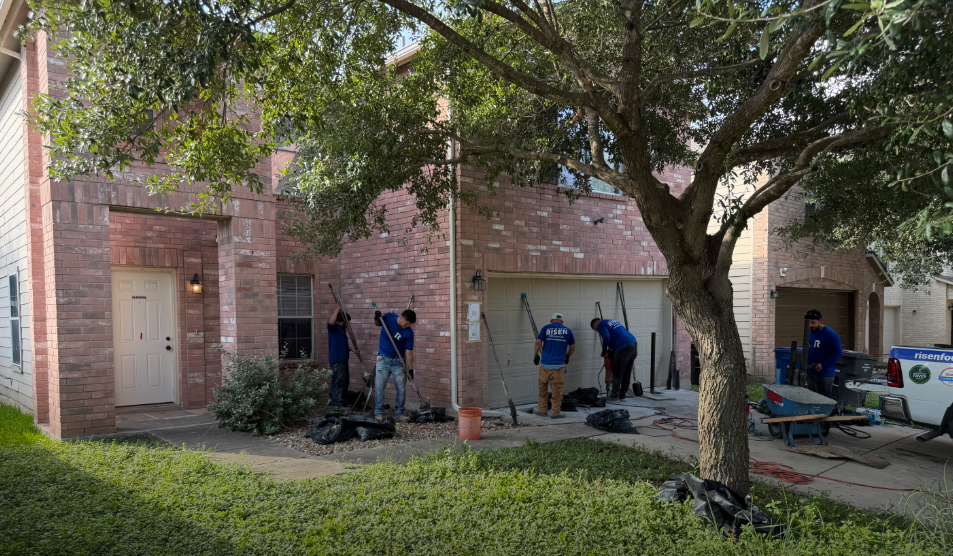
can be a serious indication of foundation movement. For one West San Antonio, TX property, a substantial difference in elevation prompted the need for structural foundation repairs.
Risen Foundation Solutions is installing 38 structural steel piers, with the piers being installed from both the interior and exterior of the property. The goal is to provide additional structural support, address the foundation movement, and improve the home's long-term stability.
For homeowners who notice that their floors seem uneven or that one part of their house appears to be sinking, this type of project raises an important question:
How does a homeowner know if their house may have a significant slope?
Signs Your House May Be Sinking or Sloping
However, there are several warning signs that may indicate foundation movement or settlement.
Homeowners may notice:
- Furniture that rocks or appears uneven
- Doors that stick, swing open, or won't close properly
- Windows that become difficult to open or close
- Cracks in walls, ceilings, floors, or around doors and windows
- Gaps developing between walls, floors, ceilings, or trim
- One portion of the home appearing lower than another
- A noticeable feeling that part of the house is sinking
- Changes in the home that seem to become more noticeable over time
These symptoms can be associated with foundation settlement or structural movement, although they don't necessarily mean a home has a 7-inch slope.
Can a Homeowner Tell if Their House Has a 7-Inch Slope?
A homeowner may notice that their house feels uneven, but determining whether there is a 7-inch elevation difference
requires professional measurements.
During a foundation evaluation, measurements can be taken at different locations throughout the home to determine changes in elevation. This helps establish whether the home has significant slope or settlement and can help identify areas that may require structural attention.
It's important to understand that the number alone isn't the entire story. A professional evaluation should also consider why the foundation is moving and what type of foundation repair or stabilization may be appropriate.
What Causes a House to Develop a Significant Slope?
Foundation movement can occur for several reasons. Soil conditions, moisture changes, drainage issues, expansive soils, and settlement can all contribute to changes in how a foundation is supported.
When different areas of the soil beneath a home move or settle at different rates, portions of the foundation can experience differential movement.
Over time, homeowners may begin noticing:
- Uneven or sloping floors
- Interior and exterior cracks
- Sticking doors
- Difficult-to-operate windows
- Gaps around trim
- Changes in the elevation of the home
A professional foundation inspection can help determine whether these symptoms are related to foundation movement or another condition.
38 Structural Steel Piers for This San Antonio Foundation Repair Project
For this West San Antonio property, Risen Foundation Solutions is installing 38 structural steel piers
to provide additional support to the structure.
Because of the property's specific conditions, the structural steel piers are being installed from both inside and outside the home.
The number and placement of foundation piers required for a project depend on factors such as the foundation design, soil conditions, structural layout, and extent of foundation movement.
The objective of this project is to address the significant foundation movement and provide the structural support necessary to improve the home's stability, safety, and longevity.
What Is Foundation Leveling?
Foundation leveling generally refers to work intended to address differences in elevation associated with foundation movement. Depending on the property and the underlying cause, foundation repair may involve structural piers or other stabilization methods.
It's important to recognize that foundation repair isn't necessarily about making every floor perfectly level. The appropriate goal depends on the condition of the structure, the cause of the movement, and the recommended repair approach.
That's why professional evaluation is so important when a homeowner suspects their house is sinking or developing a significant slope.
Does a Sinking House Always Need Foundation Repair?
Not necessarily.
Uneven floors, cracks, or other changes in a home can have multiple causes. A professional evaluation is needed to determine whether the issue is related to foundation settlement, structural movement, construction conditions, or another factor.
If significant foundation movement is confirmed, potential solutions may include foundation leveling, structural stabilization, or foundation piers, depending on the property's specific needs.
When Should You Have Your Foundation Checked?
If you have noticed that your floors are becoming uneven, your home appears to be sinking, or doors and windows are suddenly difficult to operate, it may be time to have your foundation evaluated.
The sooner you understand what is happening, the sooner you can make an informed decision about potential repair options.
For homeowners in San Antonio, a professional foundation evaluation can help determine whether you're dealing with normal settling or a more significant foundation problem.
Foundation Repair in San Antonio, TX
This West San Antonio project demonstrates how significant foundation movement can require a comprehensive structural solution.
With 38 structural steel piers being installed from both inside and outside the property, Risen Foundation Solutions is working to provide the additional structural support this home needs.
If you suspect your home is sinking, settling, or developing a significant slope, don't rely on appearances alone. Professional measurements can help determine what's happening beneath your home and whether foundation repair may be appropriate.
Need Foundation Repair in San Antonio?
Contact Risen Foundation Solutions
to schedule a professional foundation evaluation and learn more about your options for foundation stabilization and repair.